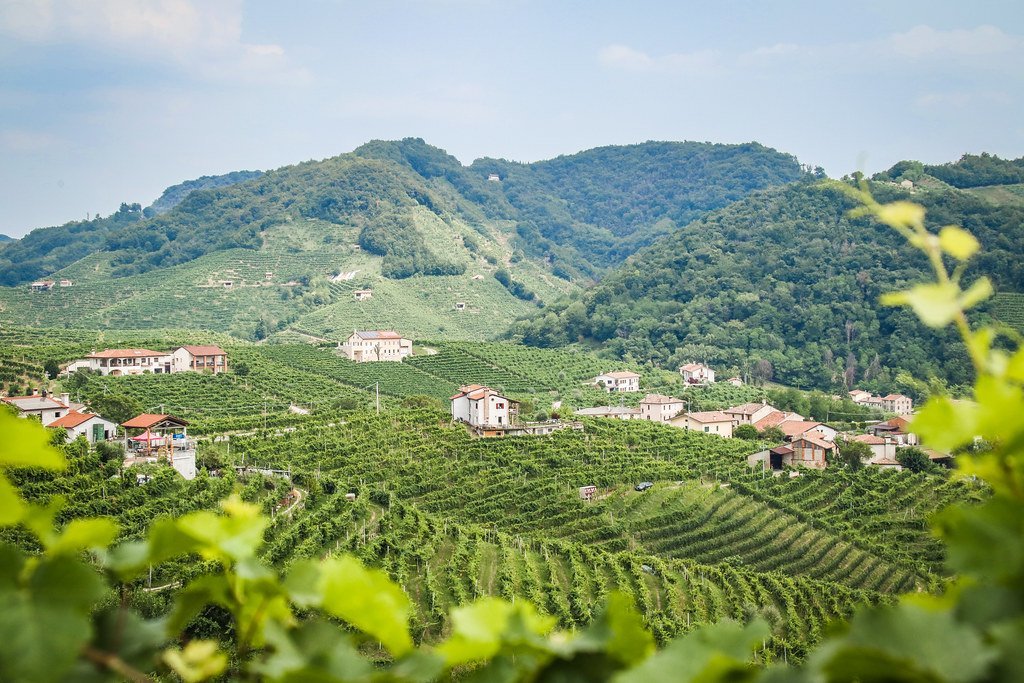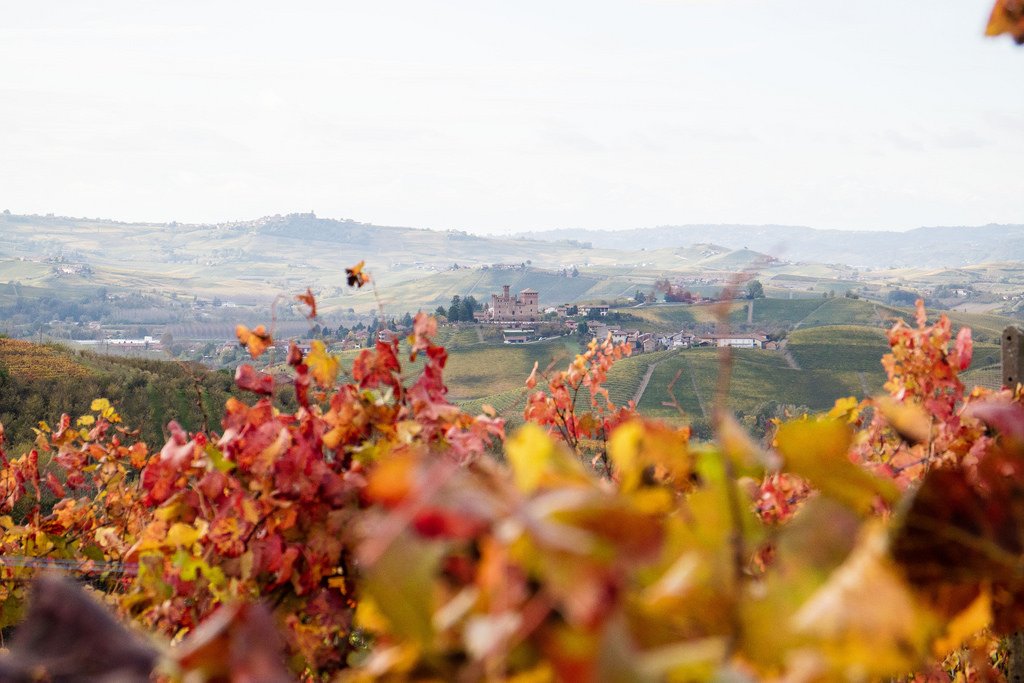
Rows of vines stretching as far as the eye can see, gentle hills painted red and gold. Strolling through the villages and in the shadow of the castles, the scent of wine and truffle fills the air. This is the Langhe, in Piedmont: immerse yourself in its poetry with our guide.
The Langhe, what to see: a 3-day itinerary
Why did we decide to visit the Langhe? We’d had this dream for a long time: a dream made of colors, scents and pages from novels like The Moon and the Bonfires.
Now that we’ve made it come true, we can say one thing: there’s nothing more romantic than a road trip through the Langhe, discovering centuries-old villages, castles and wineries.

But what exactly are the Langhe? We’re talking about a region of Piedmont straddling the provinces of Asti and Cuneo and bordering the Roero and Monferrato areas. In Piedmontese dialect, the word langa means precisely “hill.”
In this article, we’ll share our three-day itinerary, ideal for a weekend getaway. What places should you visit in the Langhe? Where to sleep and which farmhouses to eat at? How do you visit a winery? You’ll find all the answers in this guide.
Table of Contents

What to see in the Langhe: Day 1
We spend the first day in the Langhe between Grinzane Cavour Castle and the villages of La Morra and Alba. The day’s final stop is the Eno-Agriturismo Cascina L’Arché in Santo Stefano Belbo, which we chose for its excellent value for money. More on that later.
Grinzane Cavour Castle
Besides its historical significance, Grinzane Cavour Castle is worth visiting for the panoramic view over the Langhe from the top of the hill. In autumn, the vineyards blaze with red and gold, and several trails lead out from the castle through the rows of vines.


Camillo Benso, Count of Cavour, lived in this castle for nearly twenty years. He was not only the estate’s administrator but also the town’s mayor, and personally promoted the cultivation of vines and wine production through extensive study and research.
Today, Grinzane Castle houses the Museum of the Langhe: an exhibition dedicated to the traditions and products of this region and to the life of the Count of Cavour. Inside you’ll also find a wine shop and a Michelin-starred restaurant.
Grinzane Cavour Castle: hours and prices
- Open every day from 10:00 AM to 7:00 PM (last admission at 6:00 PM);
- Full ticket €8, reduced €6;
- Website


Cappella del Barolo: contemporary art in the Langhe
A fully colorful chapel in the middle of the Langhe? It’s called the Cappella del Barolo, a contemporary art piece created by Sol LeWitt and David Tremlett to restore a crumbling building.
The former chapel was purchased by the Ceretto family, owners of major wineries, and was reborn as a pop art landmark in 1999. It’s located in La Morra and well signposted: to find it, search Google Maps for “Cappella delle Brunate”.


La Morra and the Giant Red Bench
The small town of La Morra sits on a highly panoramic hill, amid endless rows of vines. It’s one of the main hubs for Barolo and Nebbiolo production, as shown by the many wineries in the surrounding area.
On the road connecting La Morra and Grinzane Cavour, you’ll come across another contemporary art piece: the Giant Red Bench, or Bench of Serenity.

The Big Benches of the Langhe are a project by American designer Chris Bangle, created to promote tourism in the area. The idea is to shift our perspective: sitting on a giant bench makes us feel like children again, seeing the world with renewed wonder.
So far, 59 giant benches have been built throughout the Langhe: you can find the full map on the Big Bench Community Project website.

Where to eat in the Langhe
Finding an agriturismo where to eat in the Langhe during the peak of Truffle Fair season is no small feat. After a couple of phone calls, we managed to book lunch at this restaurant, and it turned out to be the perfect choice.
Agriturismo Il Cortile
The Agriturismo Il Cortile in Diano d’Alba has a breathtaking view over the hills of the Langhe. From our table by the window, it felt like we could tumble right down among the colorful vine rows.

We enjoyed traditional Piedmontese dishes: fassona beef tartare and vitello tonnato, agnolotti with ricotta and Bra sausage, and plin ravioli. All paired with two glasses of Nebbiolo.
The dishes were truly delicious and the value for money excellent. A fun fact: the agriturismo took part in the TV show 4 Ristoranti, hosted by chef Alessandro Borghese.


Agriturismo Ca’ del Re
Another restaurant we discovered during our trips through the Langhe is Agriturismo Ca’ del Re, in Verduno. We come back here often to enjoy traditional Piedmontese dishes, including the ever-present Plin in roast meat sauce and succulent meat main courses.
In warmer months you can have lunch and dinner in the agriturismo’s charming garden, while in winter a large fireplace keeps guests warm as they dine inside.


A meal at Agriturismo Ca’ del Re has one unmissable must: washing it all down with a bottle of Basadone Pelaverga, the red wine made from Verduno’s native grape variety, Pelaverga. You’ll see, the bottle will be empty before you even realize it.

A stroll through Alba
We visited Alba during the International White Truffle Fair, which draws thousands of visitors every year. The beating heart of the town is Piazza Risorgimento, with its cathedral and town hall, where we took a sunset stroll.
We also visited the Church of San Domenico, which until November 25, 2018 hosted the exhibition La storia di Nina, a contemporary artwork by Valerio Berruti, with music by Ludovico Einaudi.


What to see in the Langhe: Day 2
Our 3-day itinerary through the Langhe continues with a day entirely dedicated to wine, starting with a visit to Barolo and its special museum, WiMu, followed by a guided tasting at the Cà Nueva winery in Dogliani.
Barolo and Wimu, the wine museum
Strolling through Barolo, you’re surrounded by the scent of must and crushed grapes. Towering over the town is the imposing silhouette of Castello Falletti, now home to WiMu, an interactive museum dedicated to wine and its history.
The Marquises Falletti played a key role in spreading the fame of Barolo wine. It was the Marquise Giulia di Barolo who introduced it to King Carlo Alberto of Savoy, who became a great enthusiast of it.


The Marquise devoted herself to perfecting the cultivation and production of Barolo wine, as well as to major charitable works. Today, WiMu is a museum that celebrates wine and tells its story from the Neolithic era onward, through art, video and augmented reality, across a total of 25 rooms.
Inside the castle, you’ll also discover the story of the Marquises Falletti and their famous guests, such as Silvio Pellico, who served for a time as the estate’s librarian.
WiMu: hours and prices
- Open every day from 10:30 AM to 7:00 PM (last admission at 6:00 PM);
- Full tickets €9, reduced €7;
- Website


Wine tasting at Cà Nueva winery
An experience not to be missed in the Langhe is a guided wine tasting of local wines, perhaps paired with a visit to the winery that produces them and its vineyards.
We chose Cà Nueva winery in Dogliani, a family-run business that has been making wine for more than 100 years. Owner Sergio has carried on the legacy of his grandfather Celso and his father, modernizing the business with new technologies while staying true to tradition.


Cà Nueva produces high-quality wines: Dogliani from the Dolcetto grape, Nebbiolo, Barolo, Roero Arneis and more. We tasted as many as eight, paired with local cured meats, cheeses and desserts.
Sergio guided us through the tasting with great warmth and expertise, making our palate burst with new flavors. A full tasting costs €25 per person: money well spent.


Another winery worth visiting if you’re in the Verduno area is that of Diego Morra. Here you can choose from various types of tastings, relying on the experience and passion of Diego and his wife Francesca.
Their Verduno Pelaverga is excellent, as is the Langhe Nebbiolo. But we fell in love with the Barolo Monvigliero: an incredible burst of flavors and aromas. One bottle came home with us: who knows when we’ll open it!


Serralunga d’Alba Castle
The day comes to an end in the shadow of Serralunga d’Alba Castle, a 14th-century stronghold with a very distinctive shape. We find it wrapped in fog, making it all the more striking.
Ours is a quick stop, but the castle is worth a visit for the view of the Alps alone, which you can admire from the third-floor windows.

What to see in the Langhe: Day 3
Our third and final day in the Langhe begins with a cultural touch, visiting Cesare Pavese’s childhood home in Santo Stefano Belbo. We then continue on to two more villages: Neive and Barbaresco.
The Cesare Pavese sites in Santo Stefano Belbo
In the popular imagination, the Langhe are tied to the pages of Cesare Pavese, the writer born in Santo Stefano Belbo in 1908. Pavese, one of our favorite authors, spent most of his life in Turin, but loved this area tenderly and gave it a home in his poetry.
Read also: In the footsteps of Cesare Pavese in Santo Stefano

In Santo Stefano Belbo, you’ll find the Pavese Foundation, dedicated to research on the life and works of Pavese and to organizing fascinating guided tours of the locations from the novel The Moon and the Bonfires.
Accompanied by a guide, we visit the Foundation and Pavese’s childhood home, discovering many anecdotes about the writer. There were moments of real emotion too, but we’ll tell you more about that in another article.


Neive, one of Italy’s most beautiful villages
We then head to Neive, one of Italy’s most beautiful villages. Its historic center is a maze of cobblestone streets climbing up toward the Clock Tower.
For lunch, more traditional Langhe cuisine at the very charming Osteria Borgo Vecchio. On red-and-white checkered tablecloths, we enjoyed excellent beef braised in Barbaresco wine and the famous Langhe hazelnut cake.


The Little Church of Coazzolo: art strikes again
After lunch, we make a detour to Coazzolo, where you’ll find another painted church, this one dedicated to the Blessed Virgin Mary of Mount Carmel.
It was inaugurated in 2017, and the artist behind it is once again David Tremlett. Not yet as famous as the Cappella del Barolo, the little church is located in the Gallo area, at the top of a steep climb. A truly spectacular sight.


Barbaresco
The last stop on our journey through the Langhe is Barbaresco, a charming little village dominated by a medieval tower. The tower was restored after years of neglect: today, a panoramic elevator takes visitors up to a height of 13 meters for a breathtaking view.
The cost of the visit is €5. We skipped the climb due to fog and rain, but we’re sure it’s worth it.


Where to sleep in the Langhe
For our trip to the Langhe, we chose the Eno-Agriturismo Cascina L’Arché in Santo Stefano Belbo. The location was great, very close to Neive and Barbaresco and just 40 minutes from the other stops on our itinerary.
For 2 nights and 2 dinners, we spent a total of €235. We recommend having at least one dinner on-site to try excellent traditional cuisine at an affordable price: just €25 per person for a menu with appetizer, first course, main course and dessert.

It’s also a great option if you’re looking for a family-friendly agriturismo in the Langhe, as the environment is very children friendly.
When to visit the Langhe
Spring and summer are fine, but the best time to visit the Langhe is between September and November.

That’s because autumn colors make this area truly magical and full of poetry. Plus, most events are concentrated in this period, such as the grape harvest, the Truffle Fair and Cantine Aperte (Open Wineries Day).
In this guide, we shared our three-day itinerary through the Langhe. More updates are coming soon, including a guide to local specialties and the places of Cesare Pavese.
We hope this has helped you plan your trip. If you have any questions or curiosities, leave us a comment. Have you ever been to the Langhe? Would you like to visit? 🙂